
Volatility in Indian Stock Market
Volatility in Indian stock market is crucial for investors, traders, and financial analysts. Volatility reflects the degree of variation in trading prices over time and serves as an indicator of market uncertainty. It can signal either risk or opportunity, depending on the perspective of the investor. In the Indian context, volatility plays a pivotal role in shaping investment strategies, especially in benchmark indices like the Nifty and Bank Nifty.
What is Market Volatility?
Market volatility refers to the pace at which the prices of securities increase or decrease within a short period. This movement is often caused by factors such as economic indicators, geopolitical events, or corporate announcements. In the Indian stock market, volatility is often measured using indices like India VIX (Volatility Index), which gives investors a sense of the market’s mood.
Volatility is not inherently negative. While high volatility might scare risk-averse investors, it also presents opportunities for traders who capitalize on price fluctuations. The key lies in understanding the reasons behind these movements and how to position oneself accordingly.
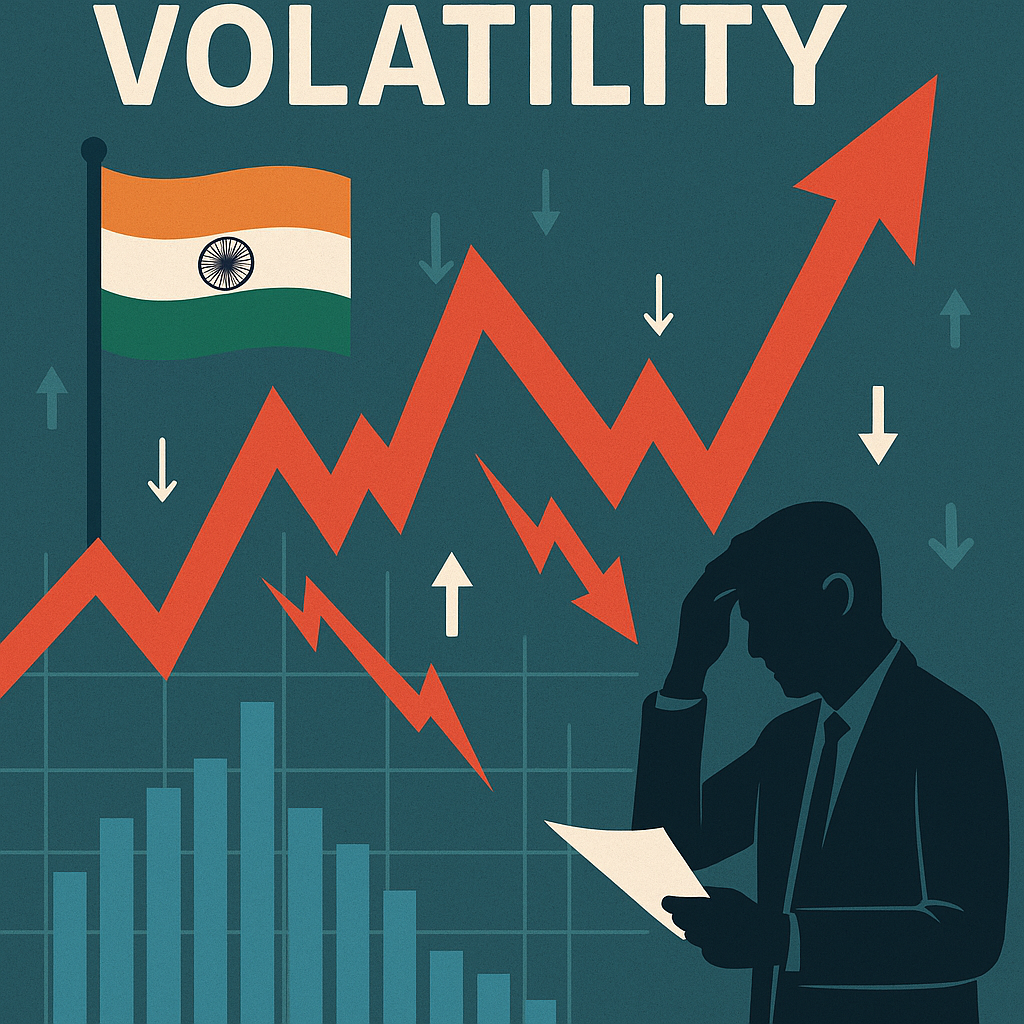
Factors Driving Volatility in Indian Stock Market
Several domestic and global factors contribute to Volatility in Indian Stock Market. These include:
1. Economic Indicators
Changes in GDP growth rate, inflation, interest rates, and fiscal policy directly impact investor sentiment. For example, an unexpected hike in interest rates by the Reserve Bank of India (RBI) may lead to sudden market corrections.
2. Political Developments
Elections, policy reforms, and legislative changes often trigger reactions in the financial markets. In India, major announcements like budget presentations or changes in foreign investment policy are known to cause short-term volatility.
3. Global Events
The interconnected nature of today’s Indian Stock Market means that events in the U.S., China, or Europe can significantly impact Indian markets. Trade wars, global recessions, or oil price shocks can lead to high market instability.
4. Corporate Performance
Earnings reports, mergers, and leadership changes in major companies contribute to short-term market reactions. Poor performance from heavyweights in the Nifty or Bank Nifty can drag down the entire index.
5. Retail and Institutional Behavior
FII (Foreign Institutional Investors) inflows and outflows, along with the rising influence of retail investors through platforms like Zerodha and Groww, contribute Indian Stock Market fluctuations.
Measuring Volatility: The Role of India VIX
India VIX, introduced by the National Stock Exchange (NSE), is a real-time market index representing the Indian Stock Market expectation of volatility over the next 30 calendar days. When the VIX rises, it indicates a higher expected fluctuation in prices. Typically, a rising VIX suggests fear or uncertainty among investors.
For example, during the COVID-19 pandemic, India VIX surged to record levels as panic gripped the markets. Similarly, during elections or budget announcements, short-term spikes in VIX are common, making it a vital tool for assessing risk.
Impact of Volatility on Nifty and Bank Nifty
Nifty 50
The Nifty 50 is Indian Stock Market index and reflects the performance of the top 50 large-cap companies listed on the NSE. Being a widely tracked index, any major development—domestic or international—can lead to price swings in Nifty. Nifty’s movement is often seen as a barometer of overall investor confidence.
During times of market stress, such as a global recession or monetary tightening, Nifty tends to become more volatile, with increased daily swings. Monitoring these fluctuations helps investors make informed decisions.
Bank Nifty
Bank Nifty is another crucial index representing the performance of India’s top banking stocks. Due to the nature of the banking sector—highly sensitive to interest rates, NPAs (Non-Performing Assets), and policy changes—Bank Nifty is often more volatile than the Nifty 50.
Nifty Banknifty volatility trends show a pattern of heightened activity around RBI policy announcements, credit growth data releases, and changes in regulatory norms. Traders focusing on intraday or short-term strategies often track Bank Nifty due to its quick response to news and data.
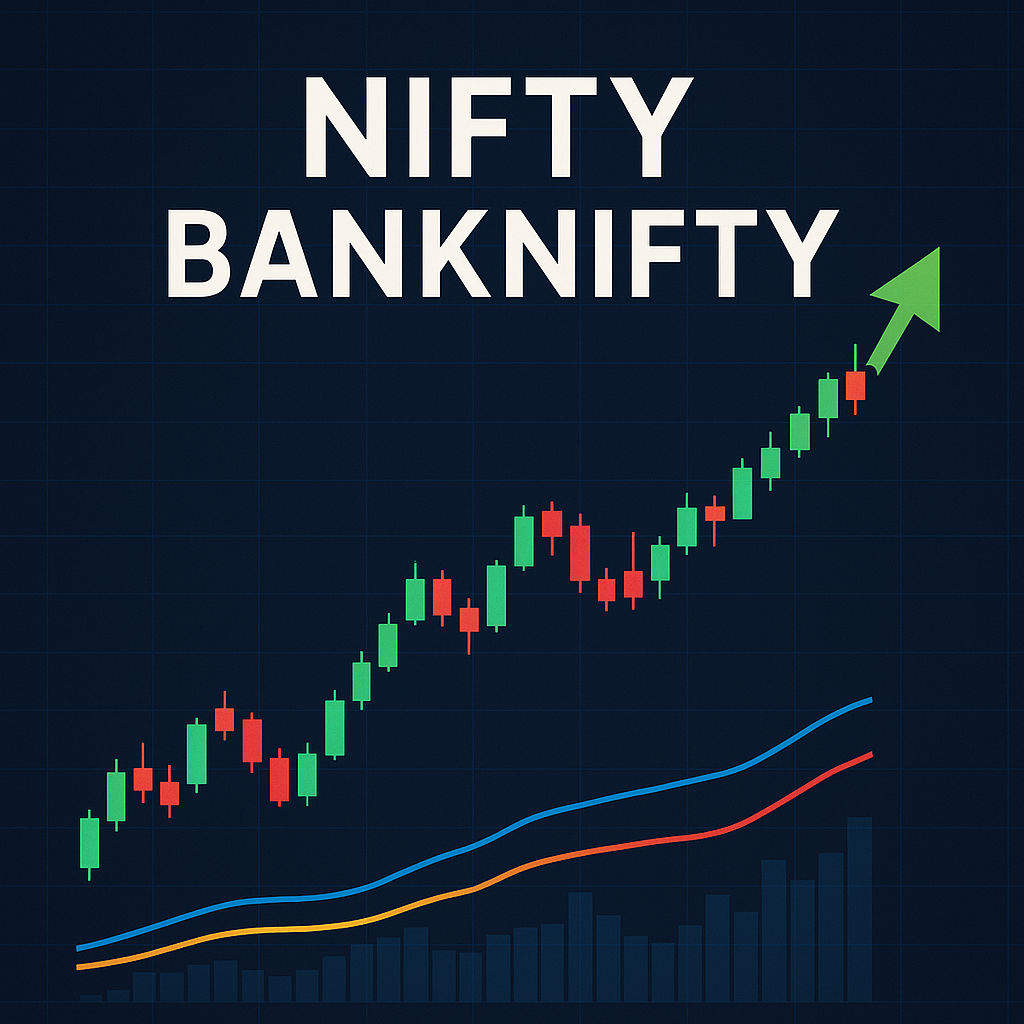
Historical Volatility Trends
Over the years, several events have triggered significant stock market fluctuations in India:
- 2008 Financial Crisis: The global meltdown led to a sharp decline in Indian indices. Nifty dropped nearly 50% within a year, and the VIX saw a massive spike.
- 2016 Demonetization: The sudden withdrawal of ₹500 and ₹1000 notes caused confusion, leading to a steep market fall before a gradual recovery.
- 2020 COVID-19 Pandemic: A sharp market correction occurred in March 2020, followed by unprecedented stimulus-led recovery, making it one of the most volatile years in Indian market history.
Such instances highlight how unpredictable the stock market can be, and why tracking volatility is vital for risk management.
Managing Risk During High Volatility
Navigating volatility requires a disciplined approach. Here are some proven strategies to monitor Volatility in Indian Stock Market :
Diversification
Spreading investments across different sectors, asset classes, and geographies reduces dependence on a single factor and cushions against sharp market moves.
Stop-Loss Orders
These help limit losses by automatically selling a stock when it reaches a predetermined price. This is especially useful during unpredictable market phases.
Hedging
Using derivatives like options and futures, investors can hedge against downside risk. For instance, buying put options on Nifty or Bank Nifty can protect a portfolio from steep declines.
Focus on Fundamentals
Long-term investors are better off focusing on companies with strong financials, steady growth, and competent management. These companies tend to weather market storms better than speculative stocks.
Regular Monitoring
Keeping track of Nifty Banknifty volatility trends and stock market fluctuations in India helps investors stay ahead of sudden changes and make timely decisions.
To open account:https://zerodha.com/open-account/
Role of Technology and Retail Participation
With the rise of discount brokers and user-friendly trading apps, retail participation in Indian markets has surged. This democratization of stock trading has added a new layer to volatility. Social media, Telegram groups, and Twitter influencers can now influence stock prices, especially small-cap and mid-cap stocks, adding unpredictability.
Algorithmic trading, too, contributes to rapid price movements. High-frequency trading (HFT) strategies executed by institutional players can cause sharp swings, especially during periods of low liquidity.
Volatility as an Opportunity
While high volatility might appear threatening, it can be an opportunity in disguise. Short-term traders often thrive during these times by leveraging tools like technical analysis, options trading, and intraday strategies.
Investors willing to do their research and remain calm during turbulence often find attractive entry points in fundamentally strong stocks. The key is patience, a long-term vision, and a solid understanding of market dynamics.
Visit Us:https://iplusresearch.in/services/
Conclusion
Volatility in Indian stock market is a multifaceted phenomenon shaped by economic, political, and global forces. Understanding its nuances is critical for anyone involved in investing or trading. By studying stock market fluctuations in India and monitoring Nifty BankNifty volatility trends, market participants can develop strategies that help them ride out the storms and seize opportunities.
As India continues to grow and integrate further with global markets, volatility is likely to remain a constant feature. Instead of fearing it, learning to navigate it effectively can be the difference between success and failure in the world of stock invest.
Leave a Reply
Want to join the discussion?Feel free to contribute!